






- Home
- Call for Papers
- Program Committee
- Registration
- Accepted Papers
- Technical Program
- Keynote Speakers
- Conference Venue
- Sponsors
- Contact Us
Keynote Speakers
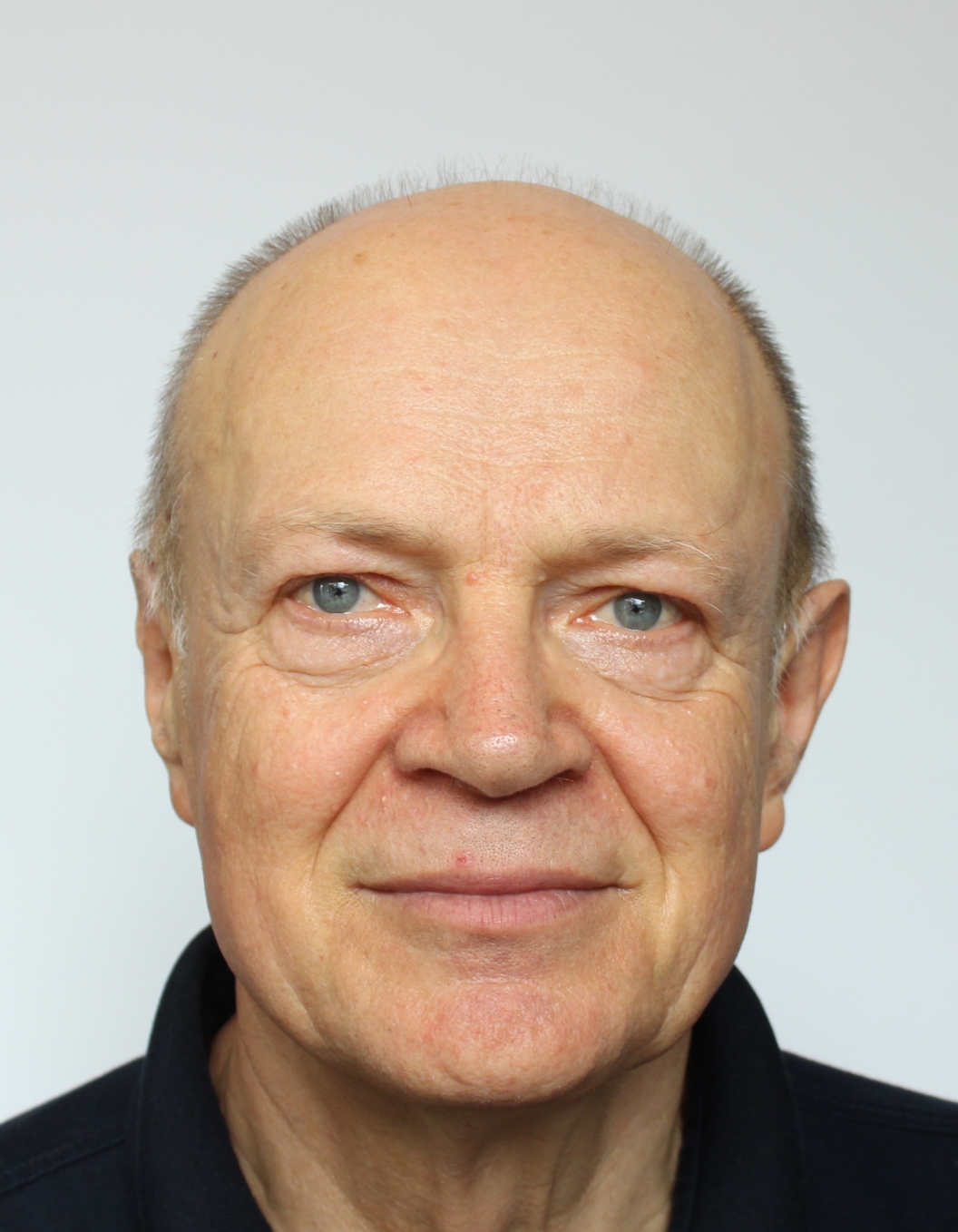 |
Josef PieprzykData61, CSIRO Polish Academy of Sciences |
Title: From Tokens to Polynomials: A New Approach to LLM Watermarking
Abstract: The widespread use of Large Language Models (LLMs) creates a growing need for reliable attribution of AI-generated text. This talk presents a novel multi-bit watermarking scheme in which the watermark is represented by coefficients of a polynomial over a finite field and embedded as points into LLM-generated text. The key novelty is an algebraic and geometric approach to watermark recovery: extraction is reduced to the Maximum Collinear Points problem followed by Lagrange interpolation. The scheme is training-free, model-agnostic, computationally efficient, and can recover the watermark when only a subset of valid points survives noise or text modification. Experiments with Llama and Mistral models demonstrate competitive recovery rates for watermarks of up to 32 bits.
Bio: Dr Josef Pieprzyk is a Senior Principal Research Scientist at Data61, CSIRO and a Professor at Institute of Computer Science, Polish Academy of Sciences. His main research interest focus is Cryptology and Information Security and includes design and analysis of cryptographic algorithms (such as encryption, hashing and digital signatures), post-quantum cryptography, secure multiparty computations, cryptographic protocols, copyright protection, e-commerce, web security and cybercrime prevention.
Dr Pieprzyk is a Fellow of IACR. He is the Editor-in-Chief of the MDPI Cryptography journal.He is also a Member of the editorial boards for International Journal of Information Security (Springer), Journal of Mathematical Cryptology, International Journal of Applied Cryptography (Inderscience Publishers), Fundamenta Informaticae (IOS Press), International Journal of Security and Networks (Inderscience Publishers) and International Journal of Information and Computer Security (Inderscience Publishers). Dr Pieprzyk published 5 books, edited 10 books (conference proceedings), 6 book chapters, and more than 300 papers in refereed journals and refereed international conferences.
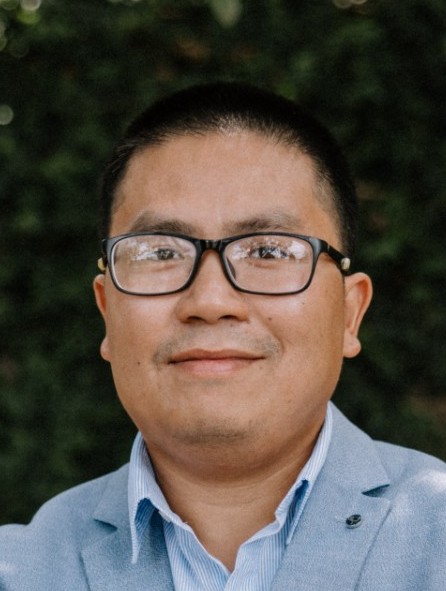 |
Khoa NguyenUniversity of Wollongong, Australia |
Title: Linking Private Data
Abstract: Privacy is often associated with unlinkability: if two actions, records, or cryptographic objects concern the same person or value, an observer should not be able to connect them. But complete unlinkability is not always what we want. Since the early work on anonymous electronic cash and authentication, cryptography has also looked for ways to reveal certain connections—such as repeated use or double spending—without giving up anonymity altogether.
In this talk, I will take a broad look at how linkability has developed within privacy-preserving cryptography, from its early motivations to more recent efforts to increase the expressiveness and functionality of linking private data. In particular, I will discuss the idea that linkability need not be viewed only as a loss of privacy: it can also be a carefully controlled form of information release. Along the way, I will touch on the choices involved in deciding what can be linked, under which conditions, and what we may learn from the resulting links.
Bio: Khoa Nguyen is an Associate Professor at the University of Wollongong, Australia. He received his PhD in Cryptography from Nanyang Technological University, Singapore, in 2014. His research focuses on the design and analysis of privacy-preserving and post-quantum cryptographic protocols. He has published around 60 papers in leading cryptography and security conferences and journals, including EUROCRYPT, CRYPTO, ASIACRYPT, PKC, the Journal of Cryptology, and IEEE Transactions. He has served on the program committees of more than 50 international conferences. His recent leadership roles include Program Chair of ProvSec 2020 and ACISP 2022, Area Chair of ASIACRYPT 2023, Workshop Chair of AsiaCCS 2025, and Program Chair of VCRIS 2026. He was awarded an Australian Research Council Future Fellowship in 2026.